About
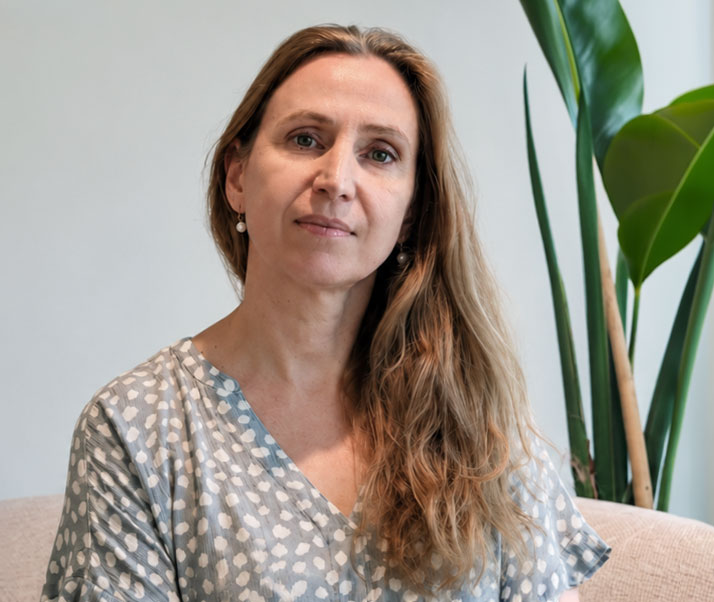
I started in painting. Now I design security software.
Twenty years later, the art training is still the part people notice — I care how something looks, and I won’t ship a screen that’s beautiful but lies about what it’s doing.
How I got here
Three turns, none of them planned
Four years at art college
A Bachelor’s in Arts — painting, drawing, colour theory. I still compose a screen the way I’d compose a canvas.
Digital design in Tel Aviv
Professional studies took me from print and illustration into interfaces. UI/UX was the first thing that used both halves of how I think.
Complex systems
Lead product designer in identity security — the least decorative work imaginable, and the most interesting problems I’ve had.
What I actually do
End to end — I don’t hand off at the wireframe
Product & UX
User research, information architecture, wireframes through high-fidelity prototypes, usability testing, design systems.
Visual & craft
Illustration, painting, and fashion design. Where my sense of proportion and palette comes from.
Build
HTML, CSS and responsive layout — enough to prototype in the browser, spec precisely, and argue with engineers in their own terms.
Tools
Figma, Adobe Creative Suite, prototyping tools — and increasingly AI, for research synthesis and faster iteration.
What I believe
After twenty years, two things I’m stubborn about
The work happens long before the screen
What I’m after is the moment a person stops fighting an interface and just uses it. Getting there means thinking a hundred times over — about the whole system and about a single label — before any of it becomes a screen. That’s the part of the job I actually like.
Tools are the baseline, not the achievement
Figma, design systems, research methods — none of that is the accomplishment. What counts is whether the thing ships and works for real people. And that part is never mine alone: great products don’t come from a single person, they come from teams that collaborate well.
Want the long version?
The case studies show the actual decisions — including the ones I’d make differently now.